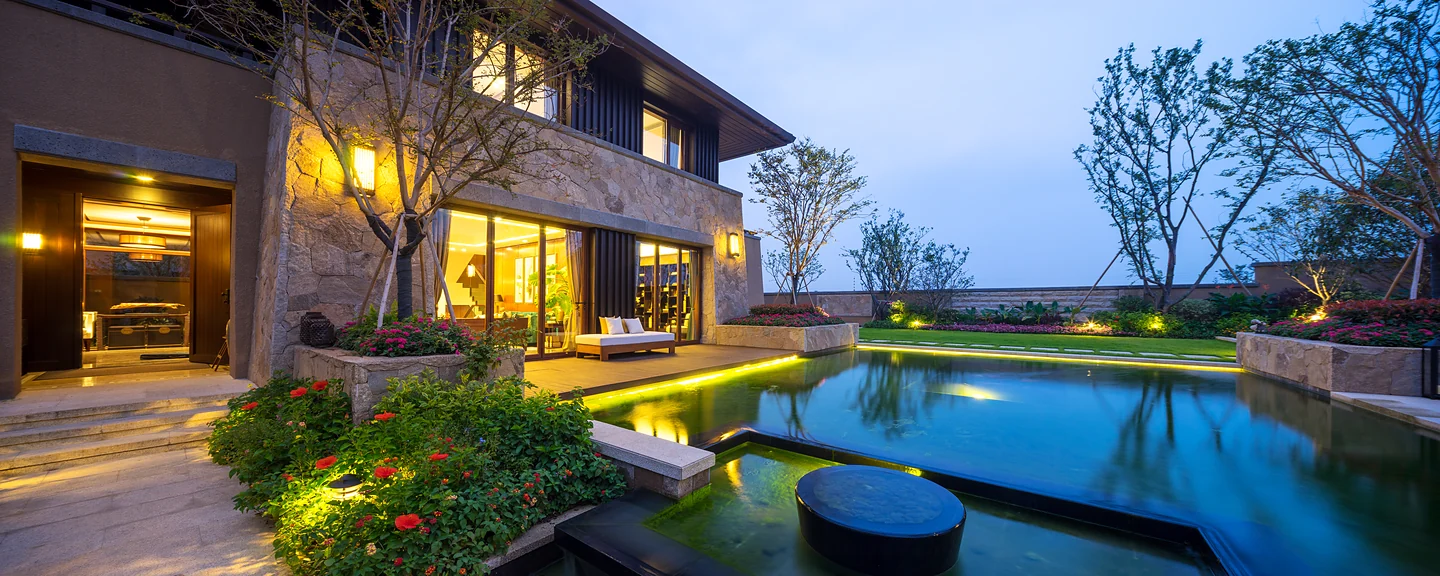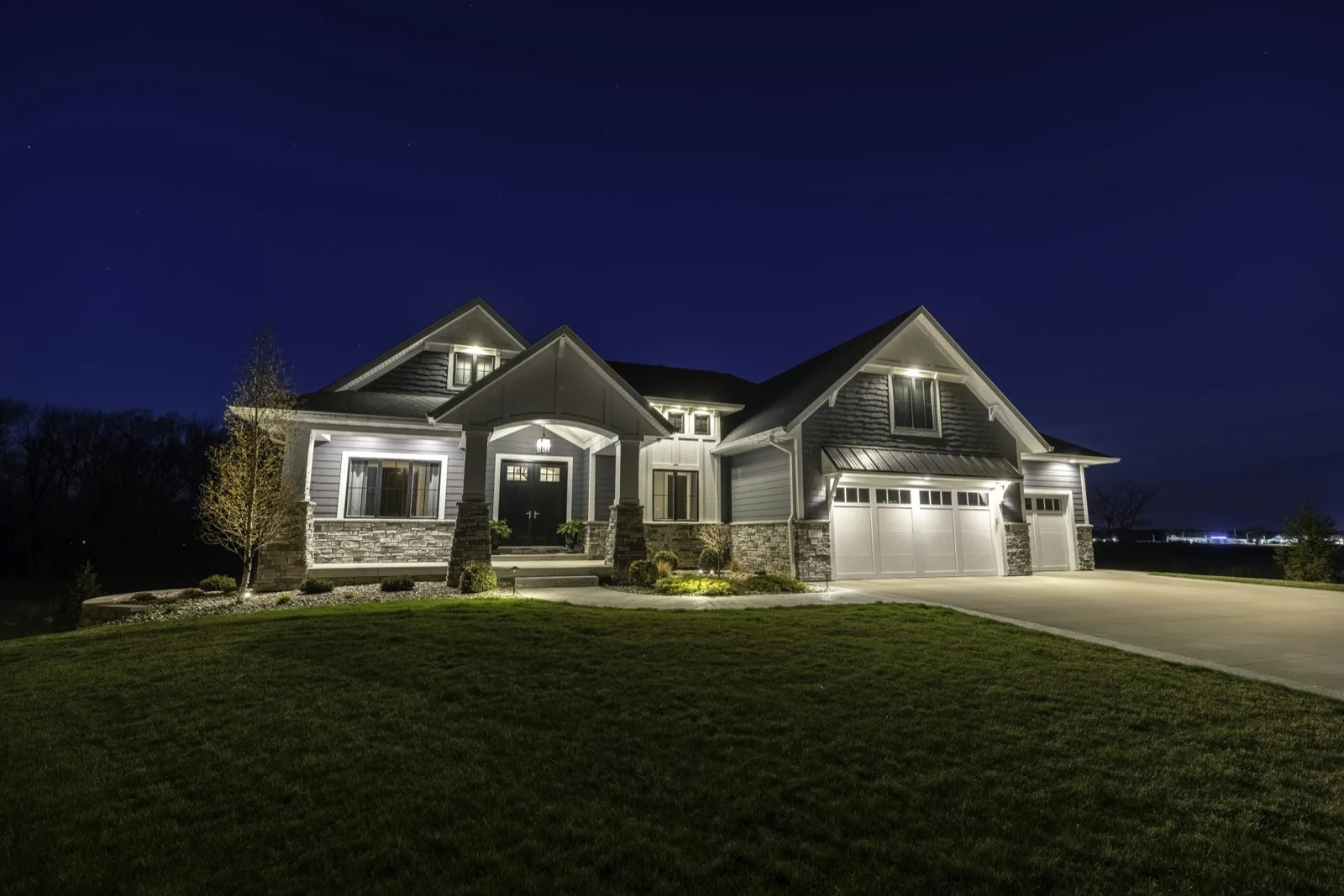
Are permanent Christmas lights worth it? Yes, if you will own the house for years, plan to run the lights well past December, and live somewhere the HOA allows a year-round roofline. Probably not if you are moving within two or three years, only decorate for the holidays, or have a roof replacement coming up soon.
Isn’t this just a question of cost?
Mostly no. Cost is the easier half, and a price comparison can’t tell you whether yours is a house where the trade makes sense. That part depends on you. On cost alone, permanent costs more on day one and closes the gap over several winters of not paying for hire.
National benchmarks put a permanent roofline system at roughly $25 to $35 per installed linear foot, which works out to about $3,000 to $12,000+ for a whole home. Hiring a crew to hang seasonal lights runs about $800 to $3,500 for a typical home’s first season, according to national guides such as Angi and HomeAdvisor as of July 2026. The breakdown is on our page about what permanent outdoor lighting costs.
Will you actually use them after December?
We’d weigh this one first, because a permanent system only earns its price by working more than one month a year. If the house would go dark on December 26 and stay that way until the following Thanksgiving, you’d be paying for a year of capability to use a month of it, and seasonal hire is the better deal.
The same LEDs that run red and green in December can sit at a plain warm white on an ordinary Tuesday in March, go orange and white for a Vols game, or red, white and blue on the Fourth of July. They’re rated for 25,000 to 50,000 hours. Run them six hours a night, every night, and even the low end of that rating is a little over eleven years of evenings. Our post on how permanent lights get used outside the holidays goes through the everyday settings in more detail.
How long will you own the house?
The savings arrive over several winters, so the person who collects them is whoever owns the house for those winters. Staying ten years? You get the full return on a one-time install. Selling in two or three? You probably won’t recoup the cost yourself.
There is a partial offset, since listing photos and evening showings happen after dark and a clean, lit roofline presents well at dusk, but nobody can honestly put a resale percentage on that, and we won’t try. If you’re moving soon and just want the house to look festive this year, book a seasonal Christmas light installation instead. The crew measures and cuts every run to your roofline, hangs it on clips rather than staples, and comes back in January to take it all down.
Is a new roof coming in the next few years?
Permanent track attaches along the fascia or under the eave, not to the shingles, so ordinary roof wear leaves it alone. A roofing crew doesn’t. The system has to be taken down before a roof replacement starts and put back once the new roof is on.
If your roof is already due, replace it first; putting a permanent system on a roof that’s about to be torn off means paying for part of the job twice. If a replacement is likely within a few years rather than now, mention it on the design walk so the timing can be planned around it.
Does your HOA or historic district allow it?
Check this before you get attached to a design. Some neighborhood covenants limit exterior lighting to a holiday window, and a system that can run all year doesn’t help much if you’re only allowed to switch it on in December. Read the covenants, and if your HOA has an architectural review step, get approval in writing before anything is installed.
Homes inside a local historic overlay may also need the city’s sign-off for exterior changes, so a call to the planning office is worth making early.
Who fixes it in five years?
Whoever installed it, if it came through a brand dealer. Many permanent systems are sold that way, and a dealer-installed system ties you to that dealer for parts, warranty claims and repairs. If the dealer closes, gets sold, or stops calling back, you’re left with a proprietary system and nobody obvious to service it.
Price gets most of the attention in a quote. Service gets almost none, and it deserves more. Gemmell Outdoor Lighting is independent, as our permanent outdoor lighting page spells out. We aren’t a Trimlight dealer or a JellyFish dealer, and we service any brand, including Trimlight, JellyFish and Gemstone systems that someone else installed.
On the repair side, the faults we see most are failed transformers, corroded connections, cut cable, water getting in, and fixtures at end of life. None of that means the original install was bad. It’s what years of Middle Tennessee humidity and freeze-thaw cycles do. The repair is usually routine; the hard part can be finding someone willing to take it on. Repairs are quoted after the system is tested, because the fault has to be found before anyone can price fixing it, and our outdoor lighting maintenance and repair page covers what service involves. Ask about the workmanship warranty as well. It covers the installation itself (wiring, connections, mounting and programming), and Phil can give you the exact terms and length before you sign.
Who should stick with seasonal lights?
Plenty of people, and we’d rather say so plainly. Renters. Anyone likely to sell within a couple of years. Homes where HOA or historic rules keep roofline lighting to the season. And anyone who honestly just wants lights up for a few weeks in December, with no use for an everyday warm white or colors for other occasions.
For all of them, seasonal hire costs less and delivers the same December. If you want to weigh the options with real numbers in front of you, start with our Nashville outdoor lighting cost guide, and the post on how a permanent Christmas light quote is built shows where the number on a permanent quote comes from.
Common questions
Are permanent lights worth it if I only decorate at Christmas?
On the numbers alone, usually not. A permanent system pays for itself when it runs most of the year, as the everyday light on the house and again for other holidays. If the roofline will only be lit for a few weeks in December, seasonal installation costs less over time and avoids the upfront spend.
If you can already picture the roofline lit on an ordinary night in March, the math starts to change.
What happens to permanent lights if I replace my roof?
The track mounts along the fascia or under the eave rather than to the shingles, but it still has to come down before roofing work starts and go back up afterward. If your roof is already due, replace it first.
If a replacement is a few years off, bring it up on the design walk so the two jobs can be timed around each other instead of one undoing the other.
Is a DIY permanent light kit worth it compared with an installed system?
A boxed kit is cheaper upfront, and on a short, simple roofline it can be enough. An installed system adds a layout measured for your actual roofline, connections made to survive years outdoors, a warm white chosen to suit the house, and someone to call when a section goes out.
Whether that’s worth the price gap depends on how comfortable you are troubleshooting outdoor wiring from a ladder, which is an odd job to sign up for when the point was getting off the ladder.
Do permanent lights look good when they are switched off?
Installed well, they barely show. The track runs as a slim line along the trim, so in daylight it reads as part of the house rather than as a string of bulbs. How completely it disappears depends on where it’s mounted and how closely the track matches your trim color.
Ask to see the track options before anything goes up.