

Pathway & Driveway Lighting
Williamson County, Tennessee
Pathway and driveway lighting uses low-voltage fixtures to define the approach to a home — making every arrival feel considered and safe, regardless of the time of night. Gemmell Outdoor Lighting designs and installs pathway and driveway systems for homes in Franklin, Brentwood, and Williamson County, TN. Free design walk. (615) 914-4411.
The Path to Your Door Should Never Feel Uncertain
A guest stepping off an unlit path, a family member navigating steps after dark, a delivery driver who can't see where the driveway ends — these are the moments that pathway lighting resolves. But it doesn't have to be clinical. The best pathway systems are the ones you stop noticing because they feel exactly right.
Gemmell Outdoor Lighting designs pathway lighting that understands your driveway's specific geometry — where it curves, where the grade changes, where a guest's eye naturally falls. Fixtures are specified for scale: a bollard that works on a formal estate approach would dwarf a cottage garden path. Getting this right takes a site visit, not a catalogue order.
Path and driveway work is the bottom layer of a full landscape lighting plan.
Designed for Your Specific Landscape
Long Approach Lighting
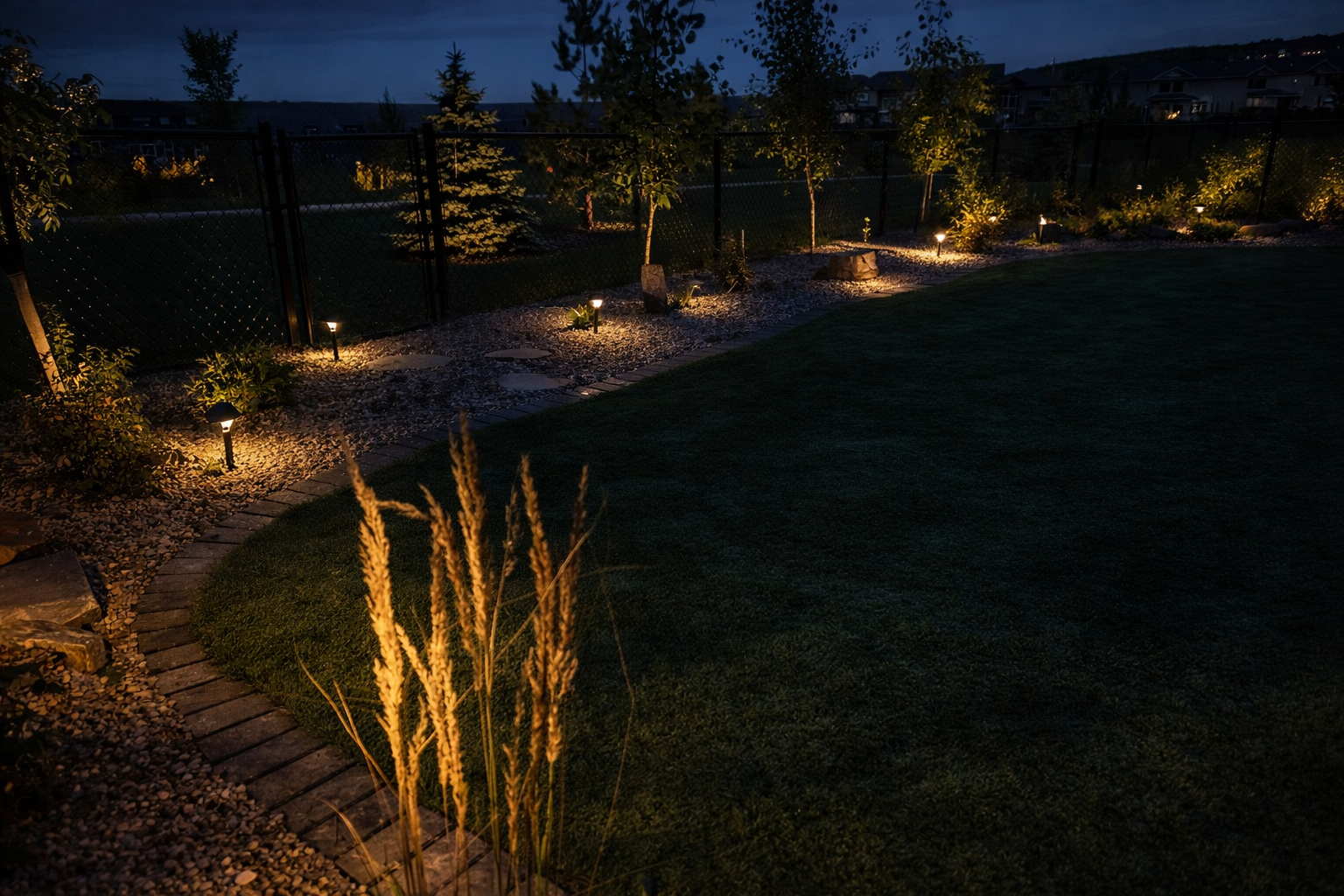
Spaced bollards or low-profile in-ground fixtures that mark the driveway edge and build anticipation — every foot of approach is part of the experience.
Garden Path Lighting
Low-profile path lights at considered intervals — warm amber that illuminates the next step without flooding the garden's natural darkness.
Step & Stair Lighting
Flush-mounted riser or tread lights that make every level change visible and safe — the most common site where guests trip in darkness.
Pathway & Driveway Services
- Walkway and footpath lighting design
- Driveway border and edge lighting
- Step, stair, and grade-change illumination
- Bollard, post, and in-ground fixture installation
- Motion-activated and sensor-triggered lighting
- Perimeter and property boundary lighting
- Low-voltage LED specification and installation
- Smart controls and dusk-to-dawn automation
- Seasonal and event-based lighting profiles
- Integration with architectural and landscape systems
- Nighttime aiming and beam calibration
- Maintenance and seasonal adjustment
What the Hardware Actually Looks Like
Two path-light styles we specify regularly. Which one suits your property depends on the architecture and how close the run sits to where people walk — that is a decision we make together on the design walk, not from a catalogue.
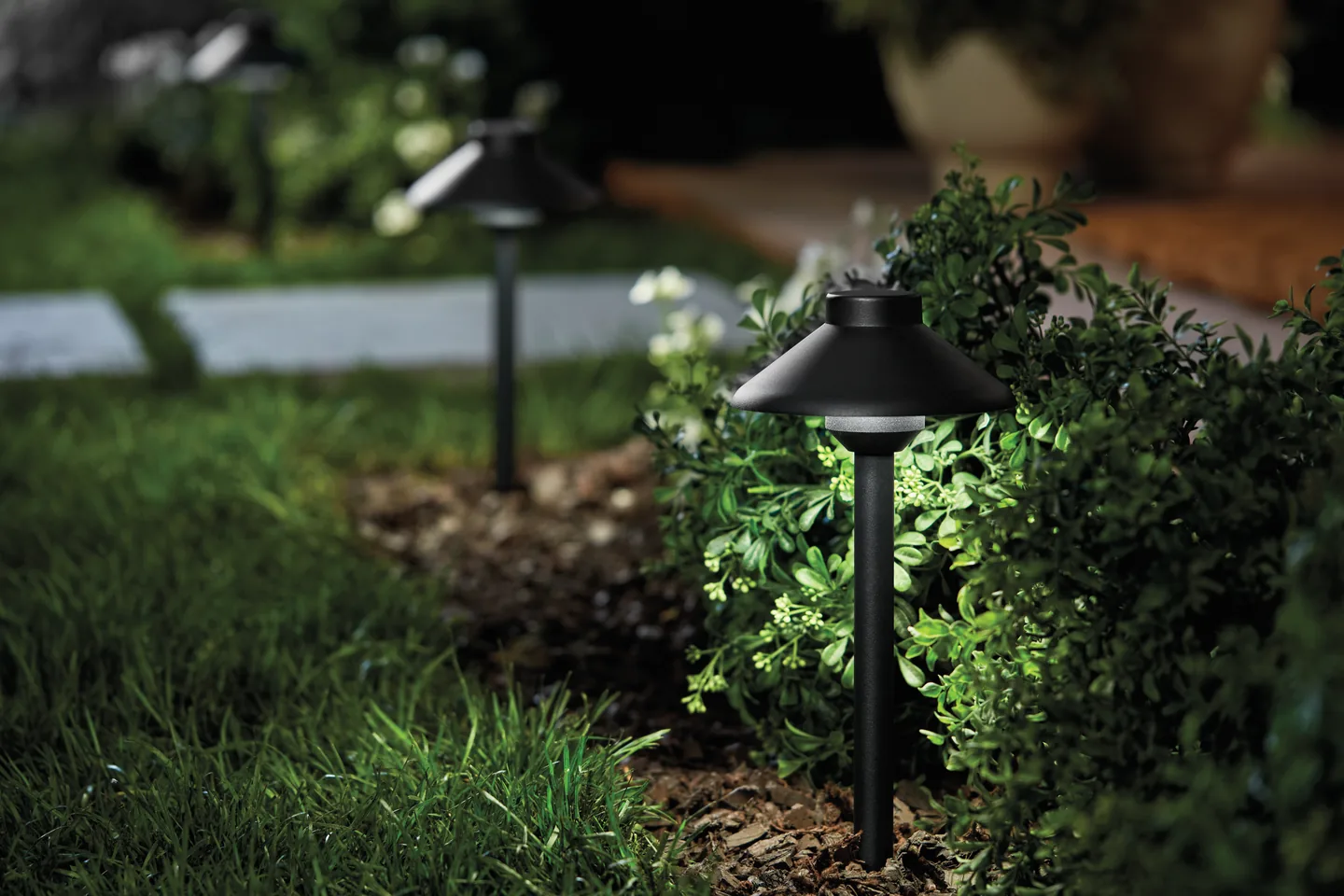
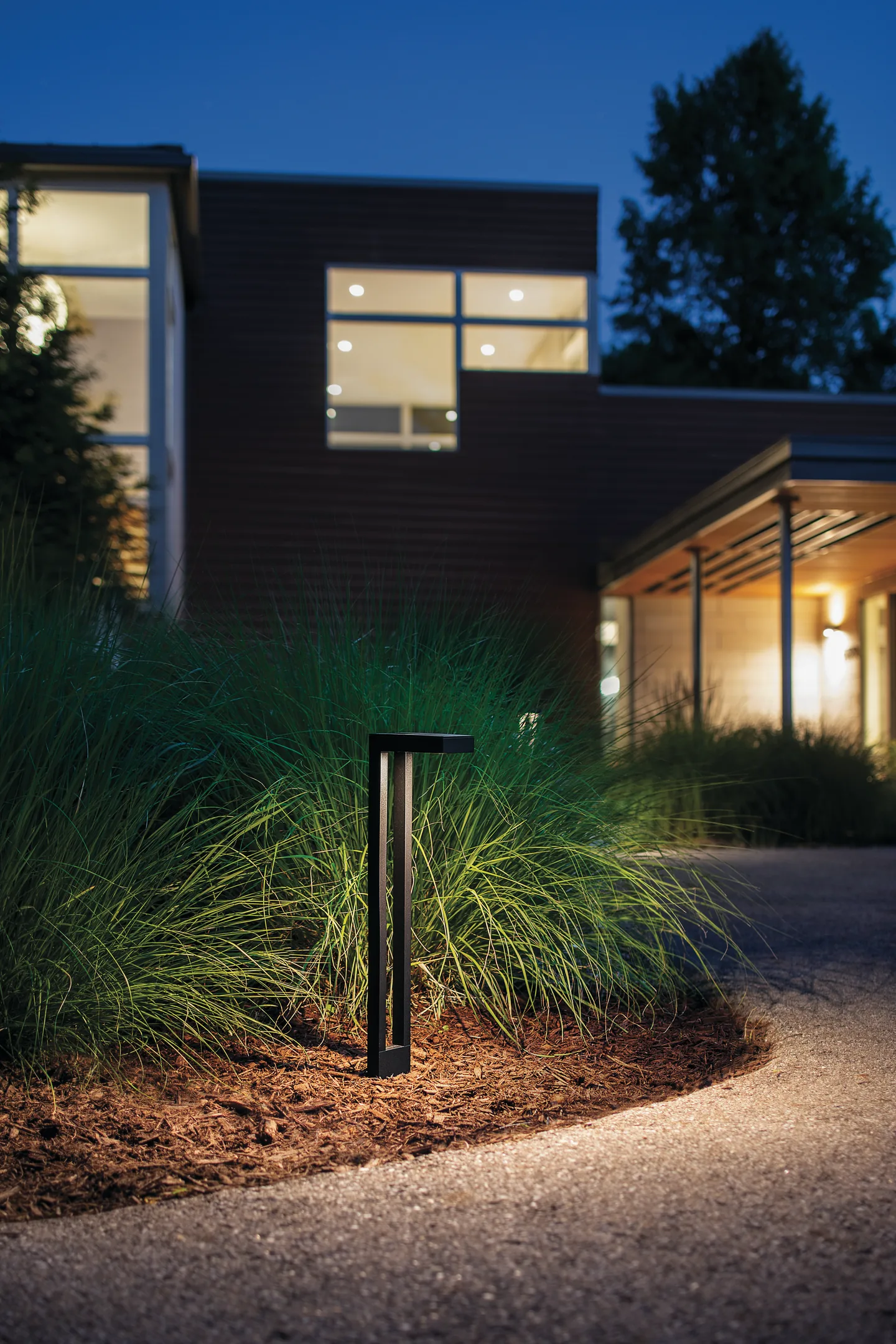
Fixture photography supplied by the manufacturer. For Gemmell Outdoor Lighting's own installed work, see the portfolio.
"Their attention to detail and commitment to quality truly stood out. We've already recommended them to others."
— A. Tregunno, a client of Phil’s previous business
Pair With Our Other Services
Questions, Answered
How far apart should path lights be spaced?
Further apart than most people put them, and unevenly. Path light spacing should follow the path rather than a tape measure: tighter where there is a turn or a step to warn you about, looser along a straight run where nothing needs pointing out. Even fixtures at close intervals is what produces the runway look.
Spacing is set on the design walk, against your actual path, and always aimed so you see the pool of light on the ground and never the lamp itself.
How far from the house should landscape lights be placed?
Closer than you would think for some jobs, and further than you would think for others. Grazing a wall means setting the fixture close in against the surface, so the light rakes across brick or stone and the texture reads. Washing a facade means pulling it back so the light arrives even and flat.
A tree wants the fixture out from the trunk, not at its base. Path lights sit just off the edge of the walk, never in it. Every one of those positions is marked on the plan before a trench is cut.